Creating engaging blog content is a crucial aspect of any successful online marketing strategy. With the vast amount of information available on the internet, it can be challenging to produce content that stands out and resonates with your target audience. However, by following a well-structured approach, you can develop a content creation process that yields high-quality, engaging blog posts. In this tutorial, you will learn how to create blog content in 4 easy steps, using a simple yet effective methodology that will take your content to the next level.
Step 1: Planning and Researching Your Blog Content
Before you start writing, it's essential to plan and research your blog content. This involves identifying your target audience, choosing a relevant topic, and gathering information to support your arguments. For instance, if you're writing about "tips for writing engaging blog content," you should research the latest trends and best practices in content creation. You can use tools like Google Trends, Keyword Planner, or social media listening to find inspiration and stay up-to-date with industry developments. 
Step 2: Crafting a Compelling Blog Post Title and Introduction
Crafting a compelling title and introduction is critical to capturing your readers' attention and enticing them to read further. Your title should be descriptive, informative, and optimized for search engines, including relevant keywords like "blog content creation" or "writing engaging blog posts." The introduction should provide a brief overview of the topic, highlighting the benefits and value that readers can expect to gain from your content. For example, a title like "Tips for Writing Engaging Blog Content From Scratch" effectively conveys the topic and includes a relevant keyword. 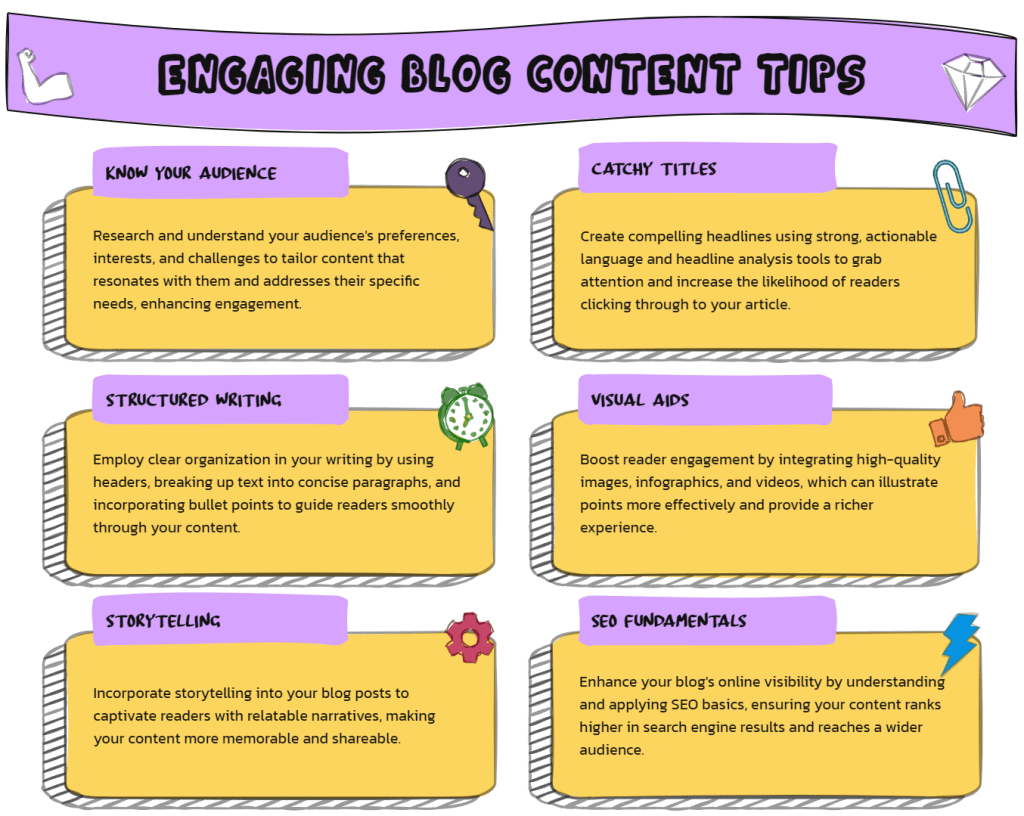
Step 3: Writing and Optimizing Your Blog Content
With your title and introduction in place, it's time to start writing your blog content. This involves developing a clear and concise structure, using a conversational tone, and incorporating relevant keywords to enhance search engine optimization (SEO). Break up your content into subheadings, bullet points, and short paragraphs to improve readability and make it easier for readers to scan. You should also include high-quality images, infographics, or videos to illustrate your points and add visual appeal to your content. Remember to use header tags (H1, H2, H3, etc.) to organize your content and highlight key points, such as "creating blog content" or "writing engaging blog posts."
Step 4: Editing, Publishing, and Promoting Your Blog Content
Once you've written your blog content, it's essential to edit and proofread it carefully to ensure that it's error-free and polished. Check for grammar, punctuation, and spelling mistakes, and make sure that your content flows logically and is easy to understand. After publishing your content, promote it through social media, email newsletters, or other channels to reach a wider audience. You can also repurpose your content into other formats, such as videos, podcasts, or infographics, to cater to different learning styles and preferences. By following these steps, you can create high-quality, engaging blog content that resonates with your target audience and helps you achieve your online marketing goals.
Frequently Asked Questions (FAQs)
Q: What is the ideal length for a blog post?
A: The ideal length for a blog post varies depending on the topic and purpose, but a general guideline is to aim for 500-1000 words.
Q: How often should I publish new blog content?
A: The frequency of publishing new blog content depends on your resources and goals, but a minimum of once a week is recommended to maintain a consistent flow of fresh content.
Q: What are the most important keywords to include in my blog content?
A: The most important keywords to include in your blog content are those that are relevant to your topic and target audience, such as "blog content creation," "writing engaging blog posts," or "tips for writing engaging blog content."
Mastering Blog Content: Strategies To Boost Brand Awareness
Mastering Blog Content: Strategies to Boost Brand Awareness
How To Plan Blog Content — Content Creative

How to Plan Blog Content — Content Creative
How To Write And Structure A Blog Post Your Readers And Google Will Love
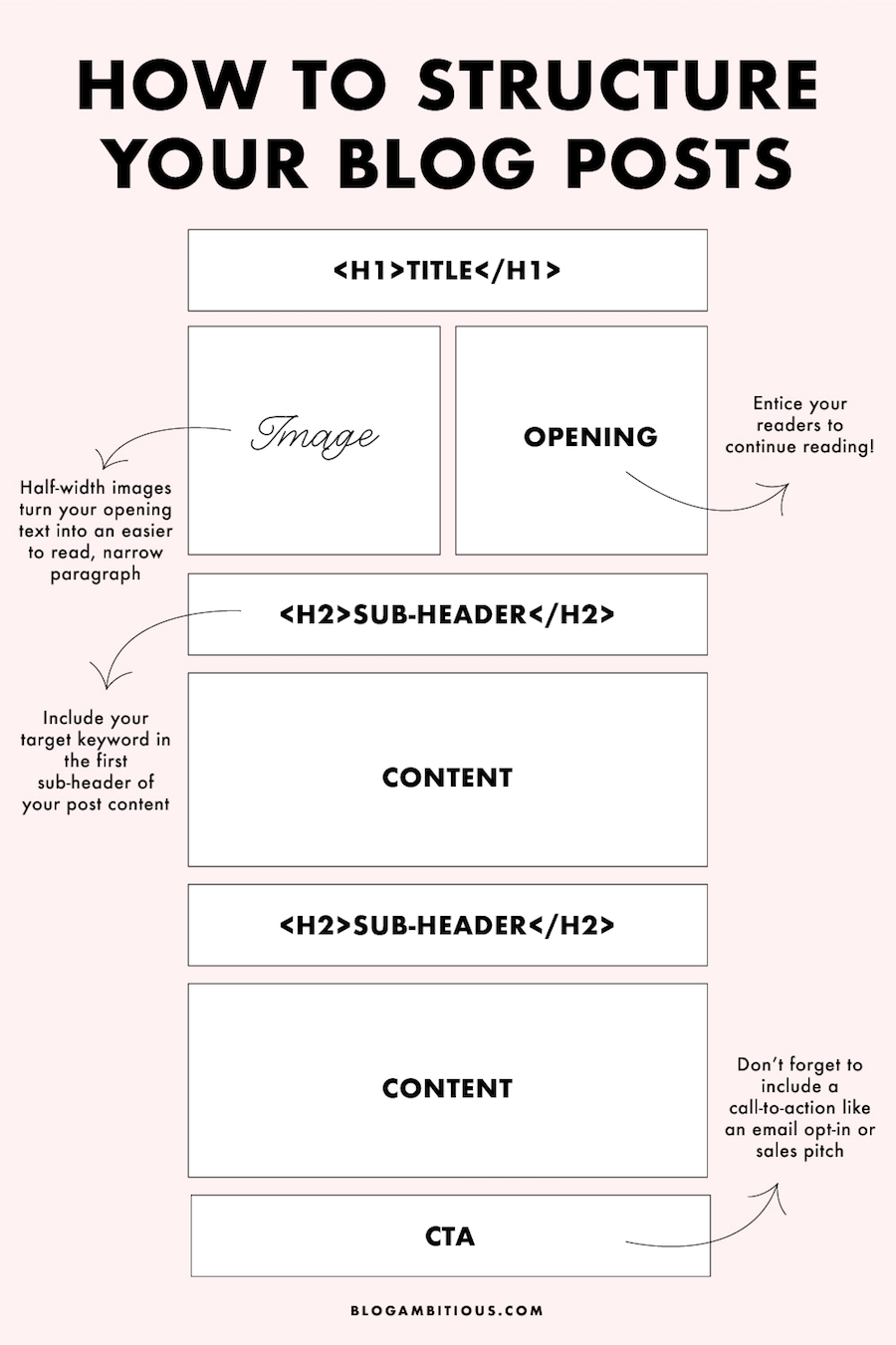
How to Write and Structure a Blog Post Your Readers and Google Will Love